

Our recipes are written in grams, Celsius and British ingredient names. If you cook with cups and Fahrenheit, this guide shows you how to convert UK recipes to US kitchens: grams to cups, fan oven to Fahrenheit, egg sizes, tin sizes and the British names for everyday ingredients.
One kitchen scale, and everything works.
Why we use grams, not cups
Low carb baking has very little margin. Almond flour, coconut flour and powdered sweeteners pack differently every time you scoop them, so a cup of the same flour can weigh noticeably more or less depending on how you fill it.
Converting our gram amounts into cups also gives numbers nobody can measure, like 0.42 cup. Rounding them makes the recipe a different recipe. That is why we keep grams, and why we would rather help you weigh than give you cups that let you down.
A kitchen scale for baking

A simple digital kitchen scale costs about the same as a set of good measuring cups and is faster to use. Look for three things: it switches to grams, it weighs in 1 g steps, and it has a tare button so you can zero it with the bowl on top.
See the scale we useHow to use it, with one bowl and no cups to wash:
Fan oven to Fahrenheit
Our recipes are tested in a fan oven. If you bake without a fan, the conventional setting most American recipes assume, use the conventional column.
| Our recipe (fan) | Conventional °C | Your oven °F |
|---|---|---|
| 140°C fan | 160°C | 325°F |
| 160°C fan | 180°C | 350°F |
| 170°C fan | 190°C | 375°F |
| 180°C fan | 200°C | 400°F |
| 200°C fan | 220°C | 425°F |
If a recipe gives a temperature without “fan”, read it from the middle column.
So when a recipe says 180°C fan, set a conventional American oven to 400°F. If your oven has a convection setting, use the Celsius figure from our recipe converted directly: 180°C is 350°F on convection.
UK vs US tablespoons

Good news: spoons travel well. Is a UK tablespoon the same as a US tablespoon? Near enough: ours is 15 ml and our teaspoon 5 ml, against 14.8 ml and 4.9 ml in the US, so you can use your own spoons as they are. For liquids in ml, most American measuring jugs have a millilitre scale on the other side. Or simply weigh them: for water, milk and cream, 1 ml is about 1 g.
UK vs US egg sizes
Egg sizes do not mean the same thing on both sides of the Atlantic. A British large egg is bigger than an American large egg.
| Our recipe says | Buy in the US |
|---|---|
| Medium egg | Large egg |
| Large egg | Extra-large egg |
In bakes with several eggs this matters: four American large eggs instead of four British large ones can leave a sponge noticeably drier.
UK tin sizes in inches
British recipes name their loaf tins by weight, and the exact size differs by maker. A 2 lb loaf tin is about 21 to 24 cm long, so an 8½ × 4½ or 9 × 5 inch pan works. A 1 lb tin is about 16 × 11 cm; there is no exact US match, so use an 8 × 4 inch pan and check the bake a few minutes early, as the loaf will be a little lower.
| Our recipe | Closest US pan |
|---|---|
| 20 cm round tin | 8 inch round pan |
| 23 cm round tin | 9 inch round pan |
| 20 cm square tin | 8 inch square pan |
| 450 g (1 lb) loaf tin | 8 × 4 inch loaf pan (a little larger) |
| 900 g (2 lb) loaf tin | 8½ × 4½ or 9 × 5 inch loaf pan |
British vs American ingredient names
The one that confuses most readers: double cream in the US is sold as heavy cream or heavy whipping cream. It is the closest match, with a little less fat (at least 36%, against at least 48% for British double cream), so it whips slightly softer.
| We write | You buy or say |
|---|---|
| Double cream | Heavy cream (heavy whipping cream) |
| Single cream | Light cream |
| Ground almonds | Almond flour or almond meal |
| Bicarbonate of soda | Baking soda |
| Courgette · aubergine | Zucchini · eggplant |
| Coriander (leaves) | Cilantro |
| Rocket · spring onions | Arugula · scallions |
| Minced beef | Ground beef |
| Baking paper · cling film | Parchment paper · plastic wrap |
| Grill · hob | Broiler · stovetop |
Not sure which product we mean?
Click the ingredient link in the recipe. Our product links open the right shop for your country, so from the US you land on the American product and from the UK on the British one. If a link ever takes you to the wrong thing, tell us in the comments and we will fix it.
Where to buy keto ingredients in the US

Most of what we use is easy to find in larger American supermarkets, often in the baking or health food aisle.
Not sure what to buy first? Our keto pantry guide lists the 16 ingredients that unlock 80% of our recipes.
| Ingredient | What to look for |
|---|---|
| Erythritol, granulated or powdered | Sold as erythritol, or as blends with monk fruit. Check the label for maltodextrin and skip those. |
| Almond flour | Blanched, finely ground. Unblanched almond meal works in savoury bakes but gives a coarser crumb. |
| Psyllium husk powder | Health food aisle or online. Use powder, not whole husks, unless the recipe says otherwise. |
| Xanthan gum | Baking aisle, usually with the gluten free products. |
| Lupin flour | The one readers ask about most. It is rarely on supermarket shelves, so buy lupin flour online; our recipe links go to a US seller when you click from the US. |
| Bamboo fibre | Sold online as bamboo fiber. Oat fiber is not the same, so check the recipe notes before swapping. |
Quick answers
What is double cream in the US?
Heavy cream, also sold as heavy whipping cream.
Is a UK large egg the same as a US large egg?
No. A UK large egg weighs 63 to 73 g, a US large about 57 g. For our recipes, buy US extra-large when we say large, and US large when we say medium.
What is 180°C fan in Fahrenheit?
About 400°F in a conventional oven without a fan, or 350°F on a convection setting.
How many grams are in a cup of almond flour?
About 96 g when spooned in and levelled, and up to 112 g when scooped and packed. That difference is why we weigh.
Can I convert your recipes to cups?
We keep our recipes in grams on purpose: low carb flours pack too differently for cups to give the same result. A kitchen scale costs little and makes every recipe work as written.
Still stuck on an ingredient?
Ask in the comments under the recipe and tell us where you live. We answer every question, and your question helps the next American reader too.
Browse all recipesAbout the author: Roos de Leeuw (pronounced Rose) has cooked keto at home since her husband’s ADPKD diagnosis, and what began out of necessity became a way of eating they both love. She writes for Queen Keto about everyday keto cooking, from the kitchen basics to eating low carb on her travels.
Happy cooking, Roos
You might also like:
 10 Best Keto Cake Recipes (Under 3g Carbs a Serving)
 10 Best Keto Bread Recipes (2g Carbs or Less)
 10 Best Carnivore Diet Recipes (Zero Carb, Ranked by Our Readers)
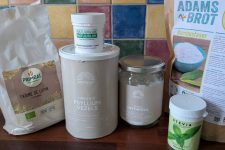 The Keto Pantry: 16 Ingredients That Unlock 80% of Our Recipes
 10 Best Sugar Free Ice Cream Recipes (All Keto)
 Keto Sugar Free Double Chocolate Custard Pie
